
In 1988, my dad gifted me the cassette-tape cast album for a new musical he’d seen in Miami called Les Misérables. For some reason, he thought I’d like it.
I more than liked it – I listened to it on repeat until I was singing along with every song.
Two years year, I was immersed in film and TV production in the Communication Studies program at Concordia University. Before my summer break, I got a call from a casting agency I’d worked with before, asking if I was available for a special project. They were about to cast the first bilingual production of Les Misérables. Was I free to help out?
While I don’t remember my exact response, I can’t imagine it was anything other than an enthusiastic “Heck, oui!”
I still hadn’t seen Les Miz live, but I knew all the lyrics by heart. Getting the chance to work on a Montreal production of the show – which would become the Canadian touring cast – felt surreal.
The show’s producers were hoping to find performers who could act and sing flawlessly in both English and French. A challenging task, but one that the local casting agency – Elite Productions – was up for. And I was on board to help!
We had to get the word out somehow. Les Misérables wasn’t yet the iconic, internationally known musical it is now, so one of my jobs was calling up radio stations and newspapers to explain the musical, its roles, and the bilingual performers we were seeking.
In those pre-Internet, pre-social media days, my big communication tools were the phone and the fax! Because we were looking for top-tier singers and actors in two languages, I had to reach out to both francophone and anglophone media outlets. I was bilingual, but not super familiar with French theatre lingo, which resulted in this now-classic moment: I was on the phone with a radio station – or it might have been a newspaper – to drum up interest in the upcoming auditions and generate press coverage. After trying to explain a bit about the show, something clicked, and the person I was talking with said, “Ah, donc c’est une comédie musicale?” (“Oh, so it’s a musical?”) To which I replied, “C’est une musicale, mais ce n’est pas une comédie.” (“It’s a musical, but it’s not a comedy.”) Followed by complete silence for a few long seconds. As I learned later, the translation of “musical” in French is “comédie musicale.” Oops.
Another key memory is two of the show’s creators, Alain Boublil and Claude-Michel Schönberg, plucking out melodies on a piano in a rehearsal room, still tweaking the French lyrics. While it was born in French in Paris, Les Miz became a hit on Broadway in English, and was now being adapted back into la langue de Molière for this production.
The auditions themselves were a blur, but I do recall singers and actors of all ages converging in a charming old building to shoot their shot.
In early 1991, the show premiered. I remember being bowled over by the production, which I got to see once in each language. The Montreal Gazette’s theatre critic Pat Donnelly said “Les Miz shoots and scores a stunning success – both in English and in French.” (That review is still online in an archived form.) Many members of that bilingual cast became icons of musical theatre for decades, including Robert Marien (Jean Valjean), Louise Pitre (Fantine), and Frayne McCarthy (Marius).
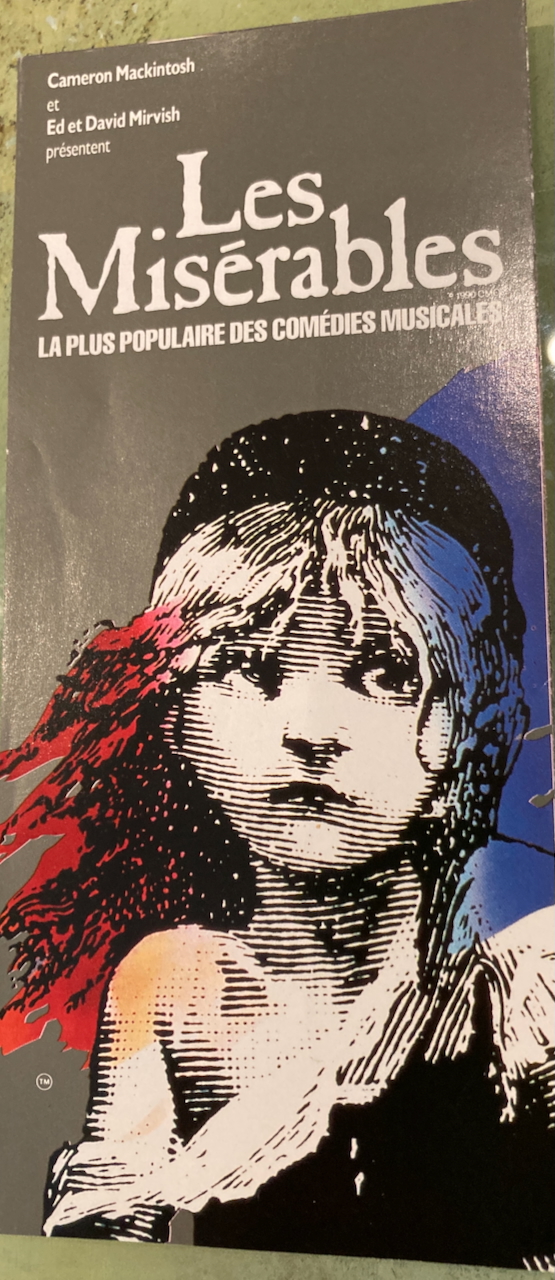
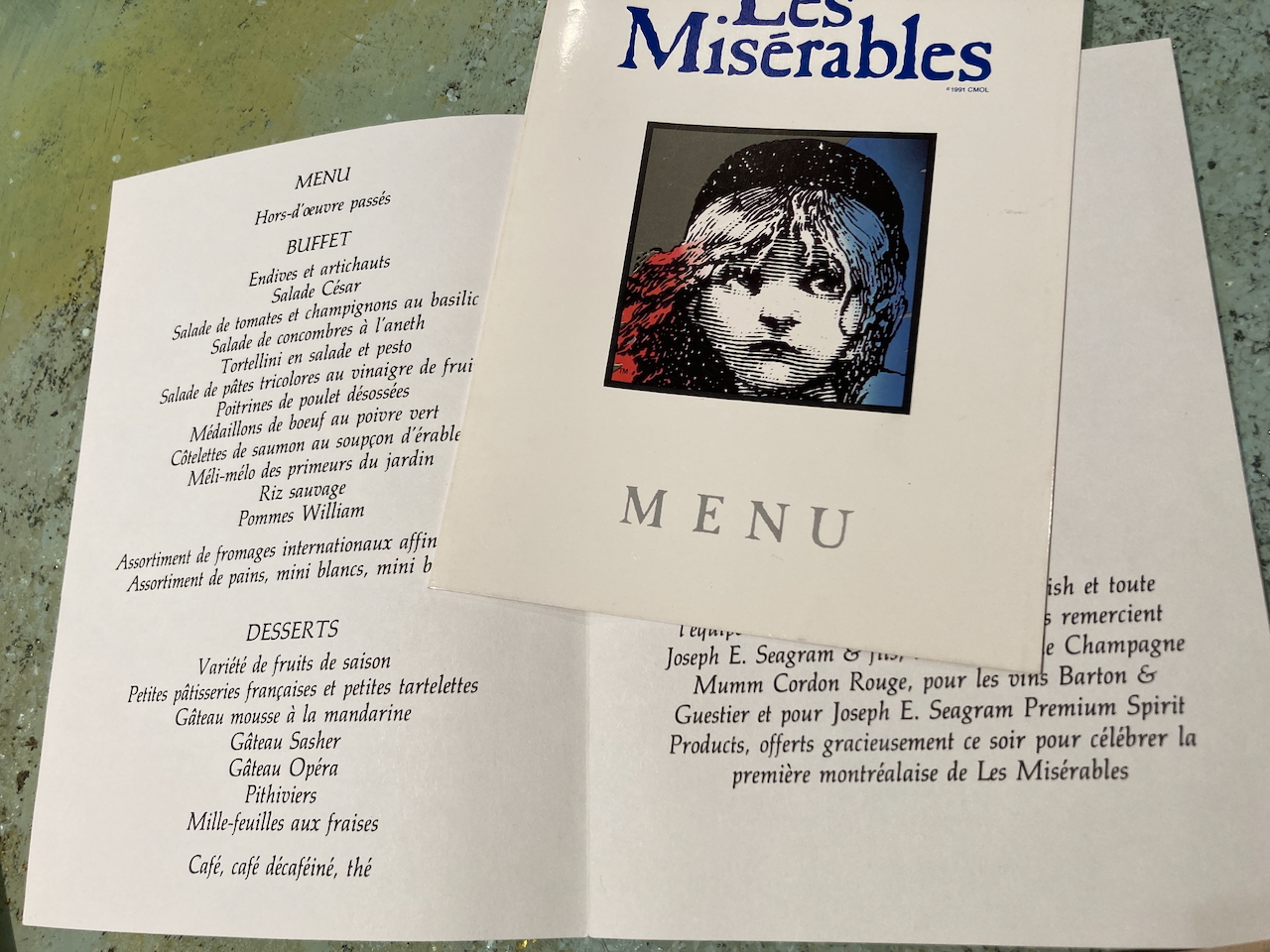
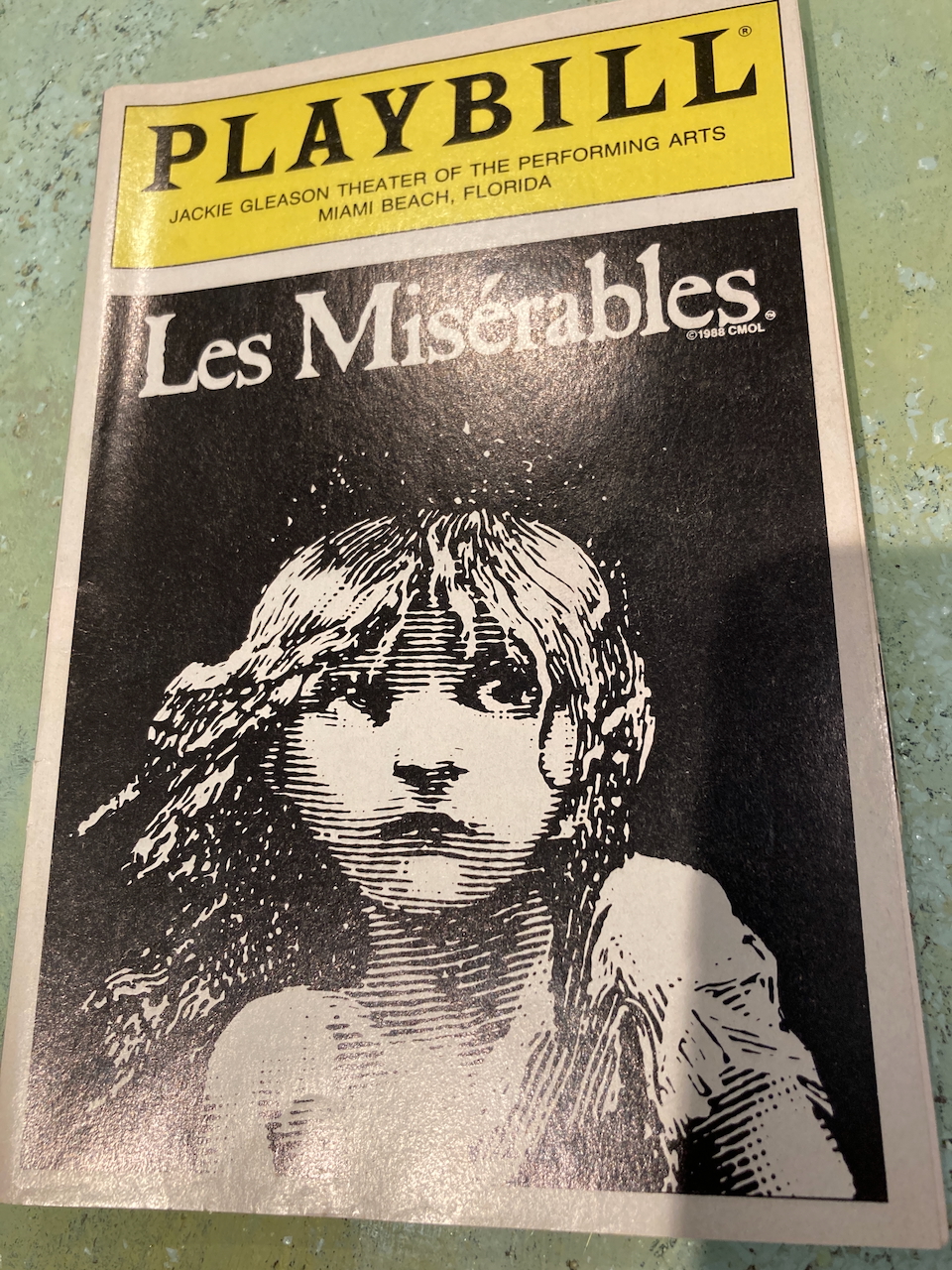
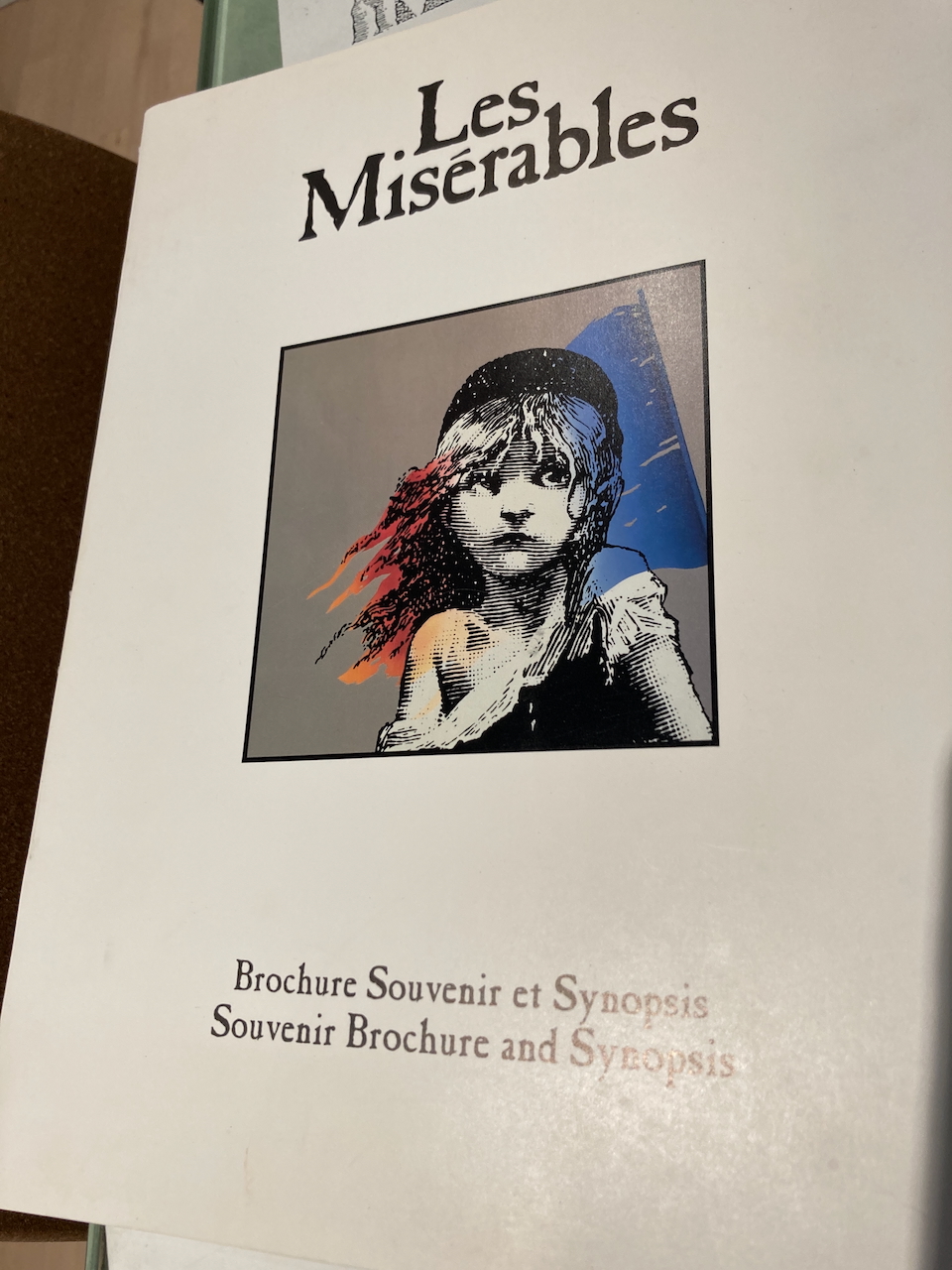
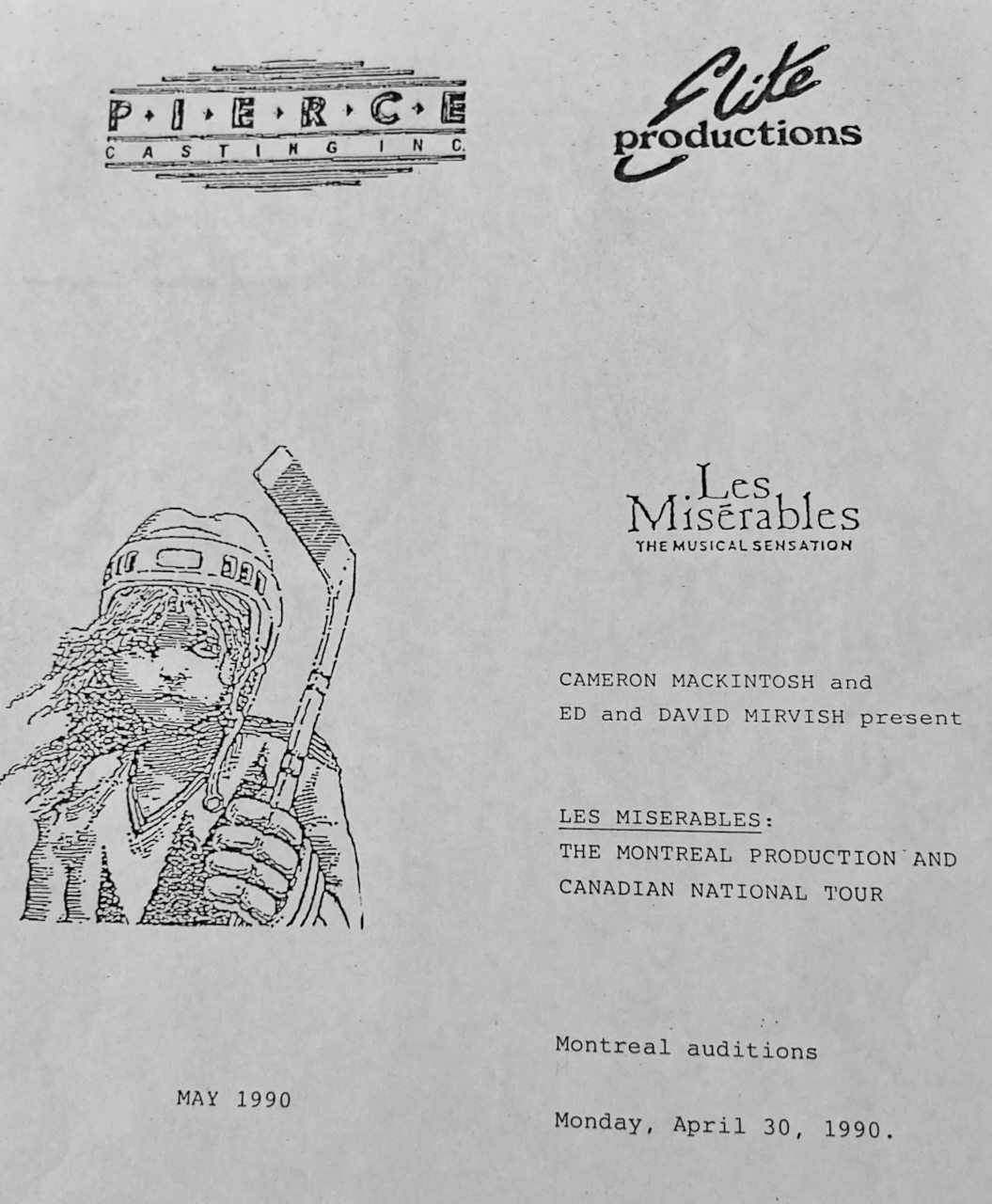
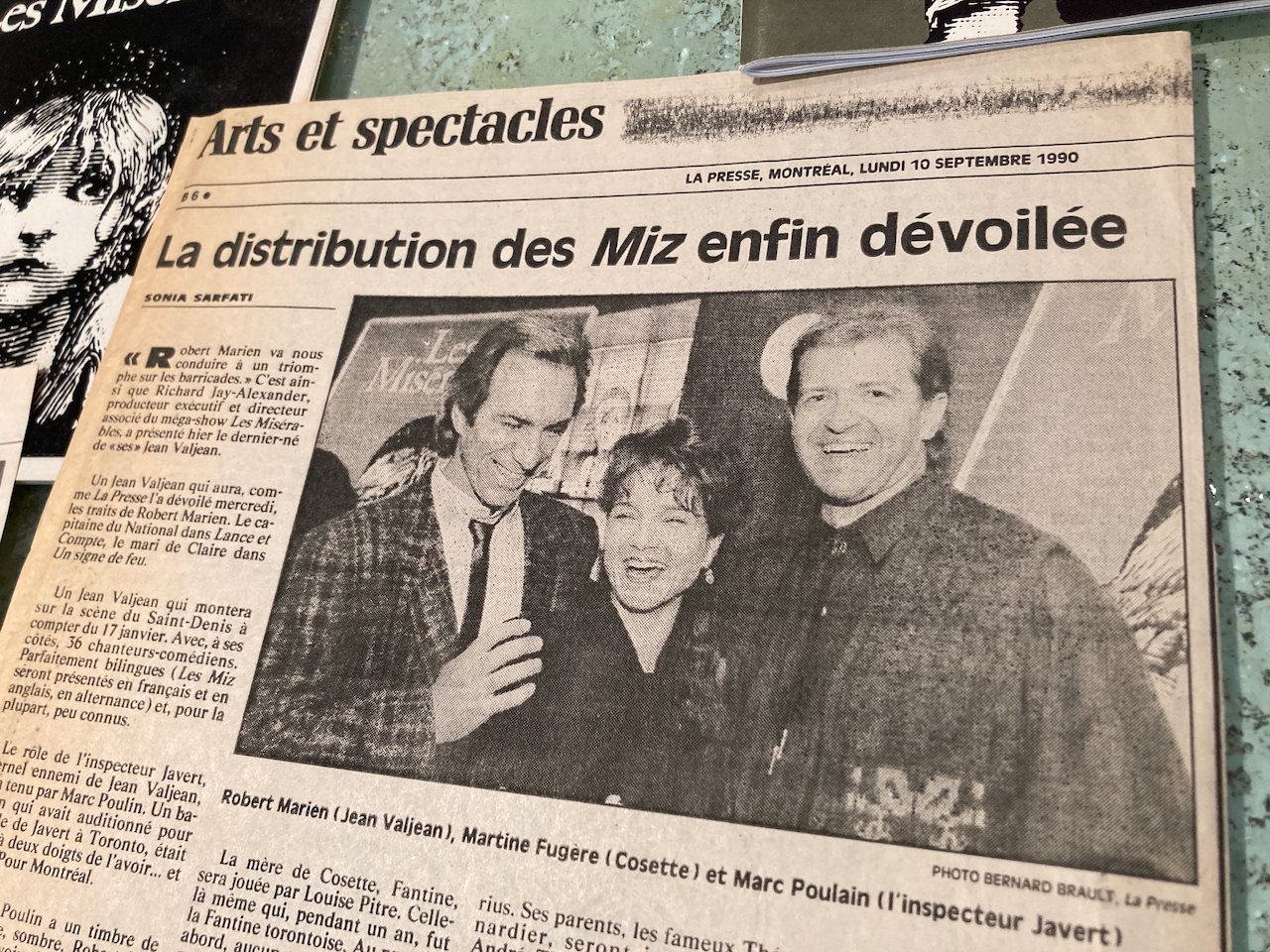
Some of my Les Miz memorabilia. Note the questionable hockey-player transformation of Cosette in a flyer advertising the Montréal auditions.
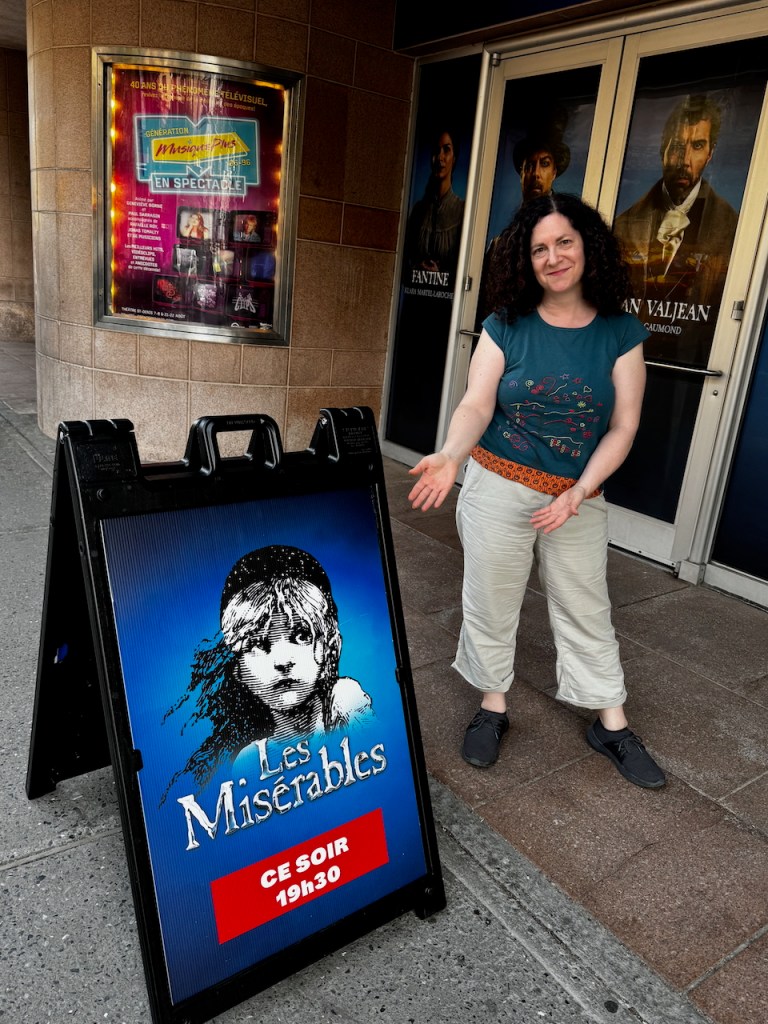
This year, Les Misérables returned in French to Montréal’s Théatre St. Denis. A last-minute decision to get tickets just before it left town was a good one. Thirty-five years later, the show is as spectacular as ever.


Leave a comment